A Complete Guide To Dessert Wine Types
A Complete Guide To Dessert Wine Types: Unlocking Styles, Chemistry & Food Pairings
Dessert Wine Essentials At A Glance
- Acidity Is Everything: World-class sweet wines are defined by their structural balance. High residual sugar (often 100g/L to over 400g/L) requires piercing natural acidity to keep the wine feeling lively, fresh, and never cloying.
- Four Natural Sugar Concentration Paths: Natural grape sugars are concentrated through four main methods: Noble Rot (Botrytis), Late Harvest (Passerillage), Frozen Grapes (Icewine), or Post-Harvest Drying (Passito).
- The Fortification Factor: Styles like Port, PX Sherry, and Vins Doux Naturels preserve natural grape sugars by adding neutral grape spirit during fermentation (mutage), killing the yeast early.
- The Golden Pairing Rule: Your wine must always be as sweet as, or sweeter than, the dessert. If the dessert is sweeter than the liquid, the wine will instantly taste harsh, thin, and sour.
- Serve Chilled, Not Warm: Avoid serving sweet wines at room temperature. Unfortified sweet wines shine at 6°C–8°C, while rich Tawny Ports and PX Sherries bloom best at a cool 10°C–12°C.
1. Beyond "Too Sweet": The Chemistry of High-Sugar Wines
For decades, dessert wines suffered under an unfair reputation. Many consumers dismissed them as cheap, cloying, mass-market drinks overflowing with added sugar.
In reality, fine sweet wine represents some of the most complex, laborious, and prestigious winemaking on earth. World-class dessert wines never have sugar added to them; instead, they rely on natural methods to concentrate the sugar already present inside the grape berry.
The secret behind any legendary sweet bottle is the delicate dance between residual sugar (RS) and total acidity. Residual sugar—measured in grams per litre (g/L)—ranges from roughly 100g/L in an entry-level sweet wine to a syrup-like 400g/L+ in extreme styles. Without sufficient natural tartaric and malic acidity, high sugar levels create a heavy, sticky liquid that coats the throat. When balanced by bracing acidity and lower target alcohol levels, the result is weightless, vibrant, and incredibly complex.
Winemakers achieve this intense natural sugar concentration through four primary avenues:
- Noble Rot (Botrytis cinerea): A beneficial fungus that dehydrates grapes directly on the vine.
- Late Harvest & Passerillage: Leaving grapes on the vine long past standard harvest to dry under the sun and wind.
- Cryo-Extraction (Icewine): Allowing grapes to freeze solid naturally on the vine before pressing.
- Drying / Passito (Appassimento): Harvesting healthy grapes and drying them on straw mats or in ventilated rooms.
💡 Drink Finder Expert Insight – The Modern UK Renaissance:
We are witnessing a fantastic shift in UK drinking habits. Modern UK consumers are completely moving away from outdated "nana's sweet sherry" tropes. Instead, there is a serious, growing appreciation for half-bottles of Sauternes, Tokaji, and Icewine—especially during festive seasons, dinner parties, and weekend tasting menus. British wine lovers are treating these bottles as the ultimate gastronomic indulgence.
2. Noble Rot & Late Harvest (Botrytised & Passerillé Wines)
Shaped by specific microclimates and beneficial fungal interaction, botrytised wines are amongst the most luxurious sweet liquids ever bottled. When the microscopic fungus Botrytis cinerea attacks healthy white grape skins under misty morning conditions followed by dry afternoon sun, it pierces the skin, allowing water to evaporate while concentrating natural sugars, acids, and aromatics.
Sauternes & Barsac (Bordeaux, France)
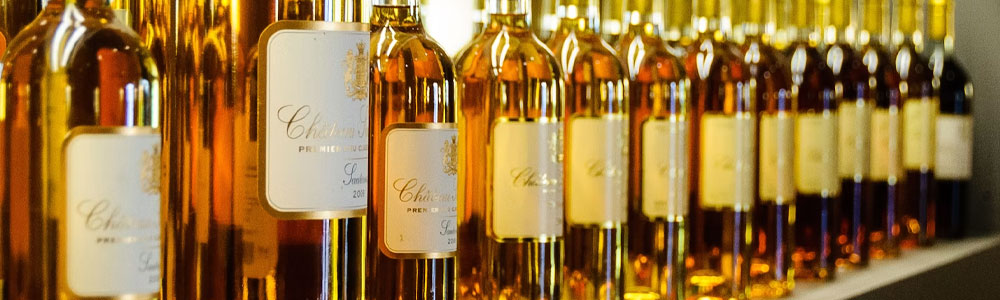
- The Profile: Golden-amber in colour, offering decadent notes of orange marmalade, wildflower honey, saffron, beeswax, and sweet vanilla from French oak maturation.
- The Grapes: Crafted from a classic blend of Sémillon (which is highly susceptible to noble rot), Sauvignon Blanc (providing electric acidity), and aromatic Muscadelle. Explore our iconic Sauternes collection.
Tokaji Aszú (Hungary)
- The Profile: An extraordinary wine boasting razor-sharp natural acidity paired with intense sweetness. Expect rich notes of dried apricot, candied ginger, orange zest, and honeycomb.
- The Classification: Made predominantly from Furmint and Hárslevelű grapes. Historically measured in puttonyos (baskets of noble rot grapes added to a base wine), modern regulations categorize Tokaji Aszú by minimum residual sugar levels (e.g., 5 Puttonyos requires a minimum of 120g/L RS, while rare Aszú Eszencia can exceed 450g/L RS). Discover authentic Tokaji Aszú wines.
Beerenauslese (BA) & Trockenbeerenauslese (TBA) (Germany & Austria)
- The Profile: Viscous, low-alcohol masterpieces (often hovering between 6% to 8% ABV) offering piercing purity, crystalline citrus, and honeyed complexity.
- The Craft: Produced primarily from Riesling, Scheurebe, or Grüner Veltliner. Individual botrytised berries are painstakingly hand-harvested one by one from the vine. Yields are astronomically low.
Late Harvest / Vendange Tardive
- The Profile: Clean, vibrant stone-fruit, mango, and floral profiles without the heavy, spicy notes of noble rot.
- The Process: Relies on passerillage—allowing grapes to naturally desiccate and raisin on the vine through sunlight and wind. Famous examples include Loire Valley Chenin Blanc and Alsatian Vendange Tardive expressions.
Category Commercial & Value Matrix (£GBP)
- Accessible Late Harvest (37.5cl / 50cl): £11.99 – £18.99
- Mid-Tier Sauternes / 5 Puttonyos Tokaji (37.5cl / 50cl): £22.00 – £45.00
- Icon Estates / TBA / Mature Vintage Sauternes (37.5cl / 75cl): £50.00 – £250.00+
💡 Drink Finder Expert Insight – The Vineyard Gamble:
Producing botrytised sweet wines involves immense financial risk and back-breaking labour. Winemakers must leave their valuable grape crops hanging on the vine weeks after standard harvest, praying for the exact sequence of damp morning mists and dry afternoon sunshine. If unexpected heavy rain arrives instead, noble rot instantly turns into destructive grey rot, wiping out an entire estate's annual harvest in 24 hours. This immense risk, combined with individual hand-harvesting, is why top-tier half-bottles command premium prices.
3. Frozen & Dried Grapes (Icewine & Passito / Straw Wines)
Beyond noble rot, winemakers have developed ingenious methods to capture pure, concentrated fruit sugar using extreme weather conditions or post-harvest drying techniques.
Icewine / Eiswein (Canada, Germany & Austria)
- Strict Legal Protocol: Grapes (typically Riesling, Vidal, or Cabernet Franc) must freeze naturally on the vine in temperatures plunging below -7°C to -8°C. They are hand-picked in the dead of night and pressed immediately while frozen solid, leaving water crystals behind and extracting a precious drop of sweet juice.
- The Profile: Pure primary fruit purity with zero botrytis influence. Brimming with tropical passionfruit, green apple, peach, and piercing acidity. Browse our luscious Icewine collection.
Passito / Vin de Paille / Straw Wines (Italy, France & South Africa)
- The Appassimento Method: Healthy, un-botrytised grapes are harvested and laid out on straw mats or hung in well-ventilated wooden crates (fruttai) for weeks or months. As the moisture evaporates, sugars, acids, and flavours concentrate.
- Key Styles: Includes Recioto della Valpolicella (a sweet, velvety red style), Passito di Pantelleria (made from aromatic Zibibbo/Muscat on a wind-swept Italian island), and French Vin de Paille (straw wine from the Jura).
Category Commercial & Value Matrix (£GBP)
- Accessible Passito / Australian Noble Cut (37.5cl): £14.99 – £22.00
- Authentic Italian Passito / Premium Vin de Paille (37.5cl / 50cl): £25.00 – £45.00
- Canadian Icewine / German Eiswein (37.5cl): £50.00 – £120.00+
💡 Drink Finder Expert Insight – The Climate Shift on Eiswein:
True German Eiswein is becoming an extraordinary rarity due to milder winter conditions, as frosts rarely arrive early or cold enough to freeze berries before rot sets in. For our UK customers seeking that iconic cryo-extracted purity, Canadian Vidal and Riesling Icewines from Niagara-on-the-Lake have become the gold standard, delivering flawless quality year after year.
4. Fortified Dessert Wines (Mutage & Spirit Addition)
Fortification is an ancient technique where a high-proof, neutral grape spirit is added directly to the fermenting grape must. This process (known as mutage in France) raises the alcohol level quickly, killing the yeast before it can consume all the natural sugars, leaving behind a naturally sweet, stable, and strong wine.
Port (Douro Valley, Portugal)
- The Mechanism: Fermentation is stopped roughly halfway through by adding 77% ABV neutral grape spirit.
- Ruby / LBV / Vintage Port: Bottle-aged styles bursting with dark plum, blackberry, cocoa, and firm structural tannins. Check out our aged Vintage Port selection.
- Tawny Port: Oak barrel-aged styles that undergo deliberate, gentle oxidation. They shift to a pale amber-brown colour, developing notes of toasted hazelnut, dried fig, butterscotch, and caramel.
Sweet Sherry & Montilla-Moriles (Spain)
- Pedro Ximénez (PX) & Moscatel: Grapes are sun-dried on straw mats (soleo) until they resemble raisins, then pressed, fortified, and aged through a fractional solera system.
- The Profile: Pitch-black, viscous, and syrupy, packing over 400g/L RS with profound flavors of dark molasses, raisins, dates, espresso, and dark chocolate.
Vins Doux Naturels (VDN - France)
- Key Appellations: Muscat de Beaumes-de-Venise, Banyuls, and Maury.
- The Profile: White VDNs capture fresh orange blossom, grapey aromatics, and peach, while red Grenache-based VDNs deliver rich red-berry, cocoa, and spice notes.
Rutherglen Topaque & Muscat (Australia)
- The Profile: Produced from extended solera aging in hot tin sheds. Liquid fruitcake in a glass, showcasing dark toffee, cold tea leaf, malt, and sticky date notes.
Category Commercial & Value Matrix (£GBP)
- Entry LBV Port / Classic VDN (75cl / 50cl): £12.99 – £19.99
- Aged Tawny Port (10/20 Year) / Premium PX Sherry (50cl / 75cl): £22.00 – £45.00
- Vintage Port / 30+ Year Old Rutherglen Muscat (37.5cl / 75cl): £50.00 – £180.00+
💡 Drink Finder Expert Insight – The Longevity Secret:
Here is a trade secret that makes fortified dessert wines an incredible value proposition for home enjoyment: their shelf-life after opening is extraordinary. While an unfortified Sauternes or Icewine should be enjoyed within 3 to 5 days of opening, an Aged Tawny Port, Rutherglen Muscat, or PX Sherry can sit in your fridge or cool pantry for months after opening without losing its freshness, thanks to its higher alcohol content and oxidative aging.
5. Service Protocols: Temperature, Portioning & Glassware
Serving sweet wine incorrectly can completely ruin a fine bottle. Follow these sommelier guidelines to ensure every glass shines:
Chilling Guidelines
- Botrytised & Late Harvest (Sauternes, Tokaji): Serve well-chilled at 6°C to 8°C. Cold temperatures keep the acidity sharp and lift volatile floral aromatics.
- Icewine: Serve crisp and cold at 6°C to 7°C to showcase its crystalline purity.
- Tawny Port, PX Sherry & Aged Fortifieds: Serve lightly chilled at 10°C to 12°C. Serving fortified wines too warm accentuates the high alcohol content, creating an unpleasant burning sensation on the nose.
Portioning & Bottle Formats
Because dessert wines are intensely rich, they are traditionally bottled in half-bottles (37.5cl) or 50cl formats. A standard pour size for dessert or fortified wine should sit between 50ml to 75ml per glass, rather than a standard 125ml or 175ml table wine glass.
Glassware Selection
Skip tiny, outdated "sherry thimbles" which concentrate alcohol fumes. Instead, opt for a small, tulip-shaped dessert wine glass or a standard white wine glass. This shape directs the liquid toward the front of your tongue to highlight fruit notes, while giving the complex aromas room to blossom.
💡 Drink Finder Expert Insight – Preserving Your Bottle:
If you open a 37.5cl half-bottle of unfortified sweet wine (like Sauternes or Tokaji) and only want a single glass, use a simple vacuum stopper or a Coravin system. This preserves the remaining wine pristine in your fridge, allowing you to stretch enjoyment across multiple weekends.
6. Pairing Protocols: Sugar-Matching & Savoury Contrasts
Food and sweet wine pairings rely on chemical balance. The cardinal rule of dessert pairing is simple: the wine must always be as sweet as, or sweeter than, the food on the plate. If the food is sweeter than the wine, the dish strips away the wine's fruit perception, leaving it tasting harsh, bitter, and aggressively sour.
| Dessert Wine Style | Ideal Culinary Match | Why the Science Works |
|---|---|---|
| Sauternes / Tokaji 5 Puttonyos | Roquefort / Stilton blue cheese, pan-seared foie gras, salted caramel tart. | High sweetness and honeyed botrytis notes contrast the salty, sharp bite of blue cheese, while high natural acidity cuts cleanly through heavy animal lipids and rich fats. |
| Riesling Icewine / BA | Lemon meringue pie, fresh fruit pavlova, green apple tart. | Pure, un-botrytised malic acidity matches tart orchard fruits and citrus curd perfectly, while high residual sugar coats the palate against sweet meringue. |
| Pedro Ximénez (PX) Sherry | Vanilla bean ice cream (poured over affogato style), dark chocolate fondant, pecan pie. | Extreme viscosity and rich molasses/fig sugars (400g/L+) overwhelm bitter dark cocoa solids and complement rich dairy fats without feeling thin or watery. |
| 20-Year-Old Tawny Port | Crème brûlée, toasted walnut tart, aged Gouda cheese. | Oxidative hazelnut, dried fig, and wood-spice aromatics complement caramelized sugar crusts, toasted nuts, and crystallized amino acids in aged hard cheeses. |
| Banyuls / Sweet Red VDN | Black forest gateau, dark chocolate orange tart, blue cheese with fig jam. | Red grape polyphenols and dark berry fruit hold up to heavy cocoa lipids, while fortified warmth balances rich chocolate bitterness. |
💡 Drink Finder Expert Insight – The Wildcard Pairing:
Want to surprise your dinner guests with an unforgettable combination? Skip the sweet course altogether and serve a chilled glass of Sauternes or Tokaji alongside spicy Sichuan chicken or a rich, fragrant Thai green curry. The high residual sugar tames chili heat on the palate, while the soaring acidity cuts through coconut milk, creating an incredible taste sensation.
Ready to discover the magnificent world of sweet and fortified wines? Explore our expertly curated global collection at Drink Finder.